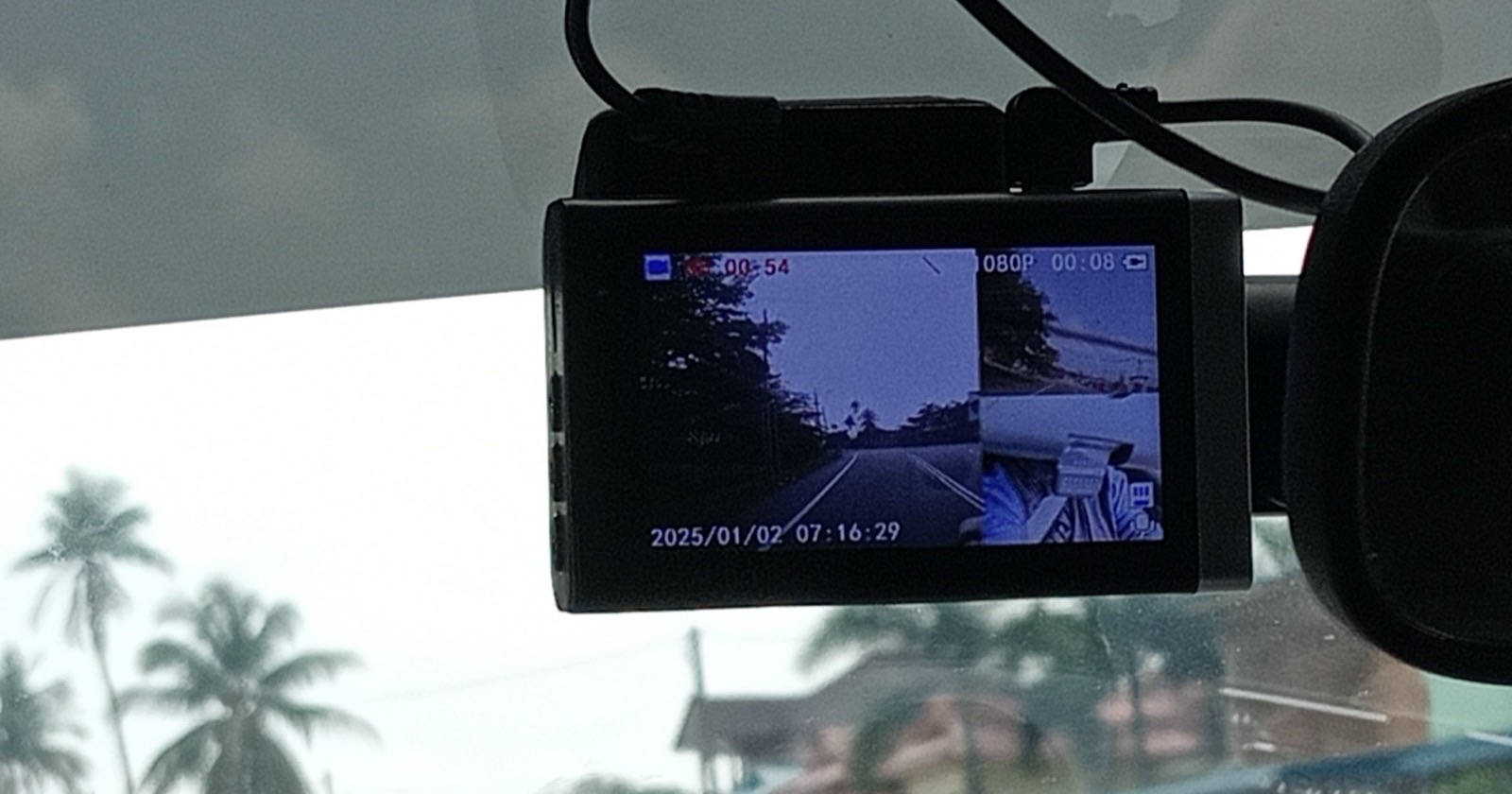
Quick answer: if the car lives outside and parking mode runs most of the week, the Vantrue N4 Pro S is the safer buy for its 1TB card ceiling, supercapacitor power, and IP67-rated rear camera. The VIOFO A229 Pro is the one to wire in if you want dual-band Wi-Fi offloads and voice commands while driving, and a garage keeps the heat and water questions off the table.
The One Decision That Splits These Two
On paper these cams look like the same product from two brands. Both record three channels at once: 4K up front, roughly 1440p out the back, and 1080p of the cabin. Both run Sony STARVIS 2 sensors on the main channels, both carry GPS, both offer buffered parking recording, and both sit in the same price bracket. Spend an afternoon reading the spec sheets side by side and only two differences survive as reasons to pick one over the other. Both makers publish full specification sheets, viofo.com for the A229 Pro and vantrue.net for the N4 Pro S, and the SD Association's speed-class overview explains the Video Speed Class rating the card in either camera needs to sustain three channels.
The first is the card ceiling. Vantrue rates the N4 Pro S for microSD cards up to 1TB; VIOFO rates the A229 Pro up to 512GB. In a car that drives an hour a day, neither limit matters much. In a Tesla, parking mode is the normal state, and three channels of buffered motion clips eat a card far faster than a commute does. Double the card is double the window before the oldest clip is overwritten, which is the difference between finding the hit-and-run from last Tuesday and finding only the last two days.
The second is how each cam is built for the weather. The N4 Pro S is powered by a supercapacitor rather than a lithium battery, which is the design you want in a car that heat-soaks in a driveway, and its rear camera carries an IP67 rating for dust and water. VIOFO publishes its own environmental figures for the A229 Pro; check the current listing rather than assuming the two match, because sealing and temperature ratings are the specs manufacturers revise between production runs.
Which One to Buy, by Situation
Vantrue N4 Pro S
The 1TB card ceiling and supercapacitor power make this the one to run in a car that sleeps in a driveway or a street spot. Triple STARVIS 2 sensors cover all three channels, and the sealed rear camera survives road spray on the inside of the glass or a sheltered exterior mount. Verified buyers rate it around 4.2 stars.
View on Amazon →VIOFO A229 Pro
Dual-band Wi-Fi at 2.4GHz and 5GHz makes pulling a 4K clip to a phone noticeably less painful than a single-band link, and voice control means you can bookmark an incident without reaching for the body of the cam. Its buffered parking mode keeps the seconds before a motion trigger. Verified buyers rate it around 4.4 stars.
View on Amazon →Skip both, feed Sentry instead
If the interior channel and the independent forward recording are not what you are after, the car already films its own surroundings. A properly specified drive in the glovebox port does that job for a fraction of the outlay, and our guide to Sentry and dashcam drives covers which ones keep up with continuous writes.
Compare Sentry drives →Spec Sheet, Side by Side
| Spec | VIOFO A229 Pro | Vantrue N4 Pro S |
|---|---|---|
| Channels | Front + cabin + rear | Front + cabin + rear |
| Front resolution | 4K 2160p at 30fps | 4K 2160p at 30fps |
| Rear resolution | 2K 1440p at 30fps | 2.5K 1440p at 30fps |
| Interior resolution | 1080p at 30fps | 1080p at 30fps |
| Image sensors | STARVIS 2 IMX678 front, IMX675 rear | Triple STARVIS 2: IMX678, IMX675, IMX662 |
| Max microSD | 512GB | 1TB |
| Wi-Fi | Dual-band 2.4GHz and 5GHz | 5GHz |
| GPS | Built in | Built in |
| Parking mode | 24-hour buffered, 15s before and 30s after a trigger | Buffered motion detection plus a low-framerate mode for long stints |
| Power design | Check listing | Supercapacitor |
| Rear camera sealing | Check listing | IP67 rated |
| Voice control | Yes | Check listing |
| Verified-buyer rating | 4.4-star average | 4.2-star average |
| Price | $$$$ | $$$$ |
| Link | View | View |
Price tiers are approximate. $ = under $50, $$ = $50 to 150, $$$ = $150 to 300, $$$$ = over $300. Tap any link for the current Amazon price.
Where a cell reads "check listing", the manufacturer does not publish that figure in the same place for both products, and guessing at it is how comparison tables end up wrong. Read it off the live listing before you decide on that basis.
The Tesla-Specific Part: Power While the Car Sleeps
This is the detail that catches Tesla owners out, and no spec sheet mentions it. The USB-A port in the glovebox is the port Sentry Mode and TeslaCam write to on every Model 3 and Model Y, including Highland and Juniper builds, and the console and rear USB-C ports on cars built since late 2021 only supply charge current. Tesla's ports also stop supplying power once the car goes to sleep. Plug a three-channel cam into any of them and you get a cam that records while you drive and goes dark the moment you walk away, which is exactly the window parking mode exists to cover.
Two ways around it. A hardwire kit taps a source that stays live and gives you true 24-hour parking mode with a low-voltage cutoff to protect the 12V battery, which is the route most owners take once they have paid flagship money for a three-channel cam. A dedicated dash-cam battery pack is the renter-friendly option: it charges while you drive and runs the cam for hours after, with no splicing into the car. Either way, budget an afternoon for routing the rear cable along the headliner and down the C-pillar, because that run, not the cam itself, is what makes the install look factory or look like an afterthought.
One more thing worth knowing before you mount: both cams want to sit high on the windshield behind the mirror area, which on a Tesla is already crowded. If you run a screen protector and a phone mount, dry-fit the cam body before peeling the adhesive, since the camera housing and the Tesla rain sensor cluster compete for the same patch of glass. Our wider roundup of Tesla dash cams for Sentry Mode covers the dual-channel option for owners who decide the cabin camera is not worth the extra cable.
What Three-Channel Owners Keep Flagging
Threads on r/teslamotors, r/TeslaLounge, r/ModelY, and r/Model3 land on the same handful of themes, paraphrased here rather than quoted.
- Card quality matters more than card size. Owners who run a standard consumer microSD in a three-channel cam report corrupted files and formatting prompts within months; the ones who buy a high-endurance card rated for continuous video write report far fewer problems, on both brands.
- Heat is the recurring villain. Owners in hot climates describe cams shutting down on summer afternoons, which is why the supercapacitor designs come up so often in those threads and why mounting the cam in the shaded strip behind the mirror is advice repeated constantly.
- The interior channel is the reason people keep these over a two-channel cam. Rideshare drivers and parents cite it most, and owners also note that it captures the inside of the cabin during a Sentry event in a way the car's own cameras do not.
- Wi-Fi transfer speed shapes how often footage actually gets reviewed. Owners on single-band links report giving up on pulling 4K clips to a phone and swapping the card into a laptop instead, which is the practical argument for the dual-band radio.
- Rear-cable routing is the step owners wish they had planned. Several describe redoing the run after the first cable rattled against the headliner or came loose from a tailgate pass-through.
Bottom Line
Buy the Vantrue N4 Pro S if the car parks outside, because the 1TB card ceiling, supercapacitor power, and IP67 rear camera are all aimed at the same problem: recording for days in weather without cooking the hardware. Buy the VIOFO A229 Pro if the car sleeps in a garage and you want the friendlier day-to-day experience, where dual-band Wi-Fi and voice control earn their keep every time you need a clip in a hurry. Whichever you choose, pair it with a high-endurance card and a power plan that survives the car going to sleep, or you have bought a very good cam that only works while you are sitting in it.
Frequently Asked Questions
Do I still need a dash cam if my Tesla has Sentry Mode?
Sentry Mode and TeslaCam already record the car's own exterior cameras to a USB drive in the glovebox, so a dash cam is not about adding exterior angles. It adds an interior channel the car does not have, a continuous forward recording with its own sensor and bitrate, and footage that stays on its own card if the car's drive fills or fails. Owners who carry passengers, rideshare, or want a second independent record of a collision are the ones who gain the most from a three-channel cam like the VIOFO A229 Pro or the Vantrue N4 Pro S.
What is the real difference between the VIOFO A229 Pro and the Vantrue N4 Pro S?
Both are three-channel cams that record 4K up front, roughly 1440p at the rear, and 1080p inside, and both use Sony STARVIS 2 sensors on the main channels. The differences that change ownership are storage and sealing: the Vantrue N4 Pro S accepts microSD cards up to 1TB and ships an IP67-rated rear camera, while the VIOFO A229 Pro tops out at 512GB and pairs a dual-band 2.4GHz and 5GHz Wi-Fi radio with voice control. A longer card ceiling matters most if you leave parking mode running for days at a time.
Can a Tesla dash cam run in parking mode from the glovebox USB port?
Not reliably. The glovebox USB-A port is the port Sentry Mode and TeslaCam record to, and Tesla's USB ports generally stop supplying power once the car goes to sleep, so a cam fed from that port shuts down when you walk away. Continuous 24-hour parking mode needs either a hardwire kit tapped to a source that stays live or a dedicated dash-cam battery pack. Both the VIOFO A229 Pro and the Vantrue N4 Pro S support buffered parking recording once they have constant power.
Which cam handles a Tesla that parks outside all summer?
Favor the supercapacitor design and the sealed rear camera. The Vantrue N4 Pro S is powered by a supercapacitor rather than a lithium cell and its rear camera carries an IP67 rating, which is the pairing you want for a car that bakes in a driveway and parks in rain and road spray. Check the current listing for the VIOFO A229 Pro's own temperature and sealing figures before assuming either way, and in any climate mount the cam behind the mirror shade rather than low on the glass where it catches direct sun.
Does a three-channel dash cam see out the back of a Tesla?
It depends on where you put the third camera. Both of these kits run the rear camera on a long cable so you can mount it on the inside of the rear glass, where a Model 3 or Model Y gives it a clear view. The interior camera on each cam covers the cabin, not the road behind. If you want rear coverage without running a cable the length of the car, the car's own repeater cameras already feed Sentry Mode clips to the glovebox drive.
How This Head-to-Head Was Judged
Both cams were compared on published manufacturer specifications for resolution per channel, sensor model, card ceiling, Wi-Fi band, parking-mode behavior, power design, and environmental sealing, plus the verified-buyer star average on each Amazon listing. Where a figure is published for one product and not the other in the same form, the table says to check the listing instead of carrying a guess into a cell. Nothing here rests on a hands-on test of either unit, and no claim about fitment, sealing, or temperature was written unless the manufacturer states it for that exact model. Ratings are rounded to one decimal and attributed; price is given as a durable tier because listing prices on both cams move with promotions.
Read more about how these comparisons are assembled on our methodology page.
More Tesla Camera and Cabin Reading
Compare other Tesla accessories on EV Picked.